How AI Impacts Quality: Consistency, Risks, and Fixes

How does AI affect quality?
AI affects quality by making results more consistent, measurable, and easier to improve over time. When it’s used well, it reduces human error, catches defects earlier, and standardizes decisions that used to vary from person to person. When it’s used poorly, it can introduce new kinds of errors—often at scale—such as biased outcomes, brittle automation, or “right-looking” results that aren’t actually correct.
Where AI improves quality
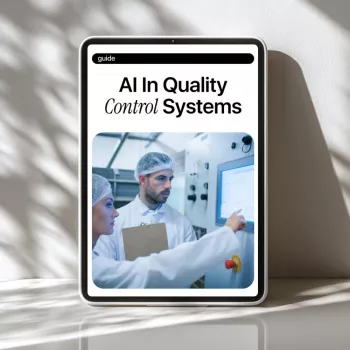
In production and operations, AI-powered inspection can spot tiny flaws that are easy to miss in manual checks, helping prevent defective items from reaching customers. In analytics, AI can monitor processes in real time and flag unusual patterns before they become big problems. In customer-facing work, AI can speed up support and reduce inconsistencies by recommending standardized responses, policies, or next steps.
What “quality” looks like with AI
Quality with AI isn’t only about accuracy. It also includes reliability (does it behave the same way under similar conditions?), robustness (does it handle edge cases?), and transparency (can the decision be explained and audited?). For many businesses, quality improves most when AI is treated like a system that needs ongoing monitoring—similar to how products are tested after manufacturing changes.
How AI can reduce quality
AI can degrade quality when training data is outdated, incomplete, or biased, causing the model to learn the wrong patterns. It can also fail quietly: a process may look efficient while producing subtle errors that are hard to notice until customers complain. Over-automation is another common issue—removing human review in places where judgment, context, or empathy are essential.
How to get better outcomes
The strongest results come from pairing AI with clear standards: defined success metrics, human checks for high-impact decisions, and regular audits to catch drift over time. For a deeper breakdown of practical ways AI changes quality and what to watch for, visit the full guide on how AI affects quality.
FAQ
How does AI improve product consistency?
AI can standardize inspections and decisions across shifts, locations, and teams. By applying the same criteria repeatedly, it reduces variability that can come from manual judgment or fatigue.










Leave a comment