Wooden Multiplication Board for Kids: 10-Min Daily Practice
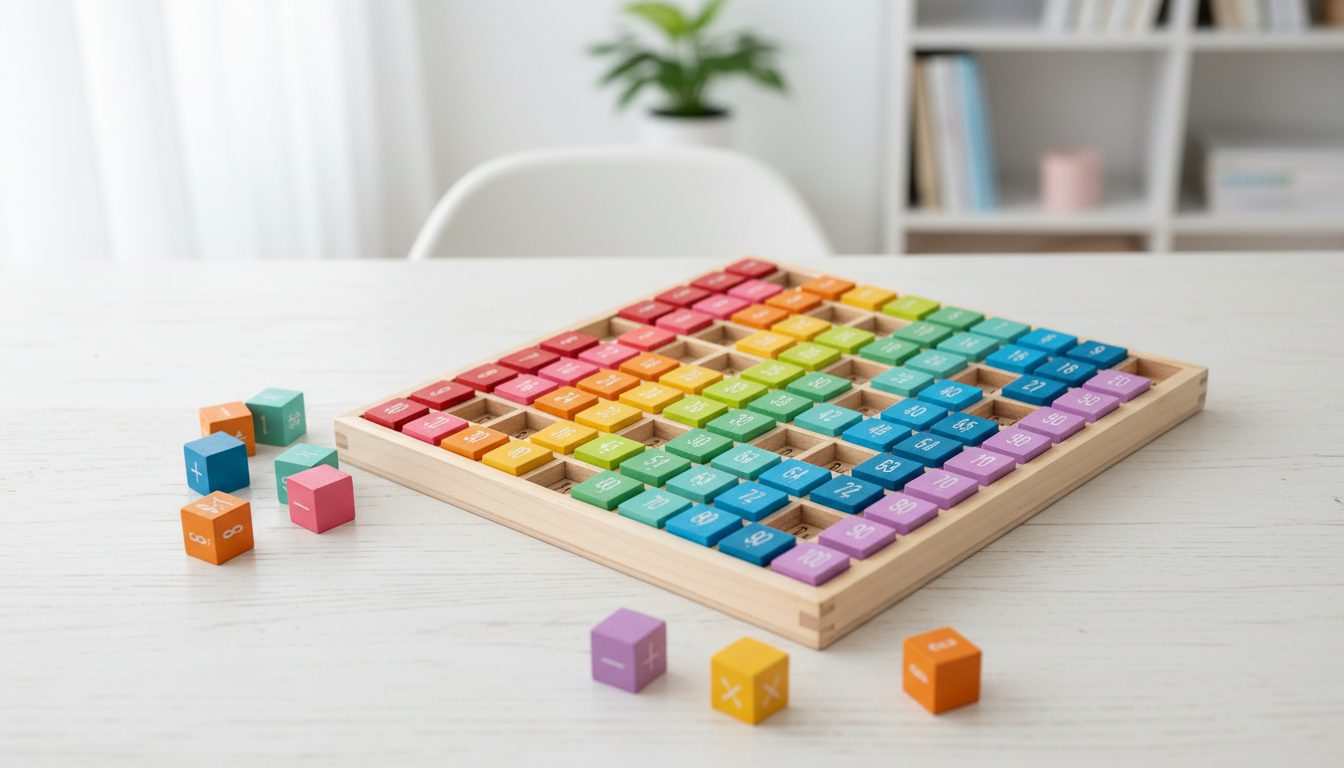
Wooden Multiplication Board for Kids: Hands-On Math Practice That Sticks
A wooden multiplication board turns memorizing times tables into a tactile, low-pressure activity. By moving pieces and spotting patterns, kids can build number sense, confidence, and speed—without relying only on worksheets or screens. It’s an easy way to make multiplication feel more like problem-solving and less like pressure, especially for learners who do better when they can touch and manipulate materials.
What a Wooden Multiplication Board Is (and Why It Works)
A wooden multiplication board is a reusable learning tool that helps kids connect factors to products using physical movement. Instead of only writing answers, children place tiles or pegs into a grid, matching number pairs and their results.
- Multi-sensory practice: seeing the grid, touching pieces, and placing them reinforces memory in more than one way.
- Pattern recognition: kids notice relationships like commutative pairs (3×4 and 4×3), “families” of facts, and square numbers (6×6).
- Fast feedback: the board’s structure makes it easier to self-correct and try again with less frustration.
- Flexible use: it fits independent practice, small-group math stations, tutoring sessions, or family math time.
For a deeper look at best practices in math learning—especially building understanding, not just recall—resources like NCTM’s Principles and Standards support hands-on, meaning-focused instruction that helps skills “stick.”
Skills Kids Build While Using It
- Fact fluency: repeated, varied exposure helps kids recall common facts more quickly.
- Number sense: the grid naturally connects multiplication to grouping and repeated addition.
- Visual-spatial reasoning: rows and columns help children map relationships and see structure.
- Focus and persistence: short, game-like sessions often feel more doable than lengthy worksheets.
- Math vocabulary: factor, product, doubles, squares, skip-counting, and “turnaround facts.”
If you’re supporting learning at home, the U.S. Department of Education’s family math guidance also emphasizes frequent practice and positive routines over high-stress drilling.
A Simple Routine for Daily Practice (10 Minutes)
Consistency matters more than marathon sessions. A quick routine keeps kids fresh and helps prevent burnout.
- Warm-up (2 minutes): pick one row (like the 4s) and complete it quickly; repeat a second row if time allows.
- Pattern hunt (2 minutes): find all squares (1×1, 2×2, 3×3…) or a “doubles” pattern (2×, 4×, 8×).
- Mixed review (4 minutes): draw 6 random facts and build them on the board; say the factors and product aloud.
- Speed + accuracy (2 minutes): redo only the missed facts; finish with a correct streak to build confidence.
- Progress tip: rotate focus each day—easy facts one day, trickier facts (6s/7s/8s/9s) the next.
Ways to Turn the Board into a Game
- Beat the timer: set a gentle time goal; improve accuracy first, then speed.
- Mystery product: call out a product (like 24) and have the child find as many factor pairs as possible.
- Cover and recall: show a completed row briefly, cover it, then rebuild from memory.
- Error detective: place one wrong piece on purpose and let kids find and fix it.
- Challenge ladder: start with 2s and climb to 9s; if a miss happens, step back one level and try again.
Choosing the Right Multiplication Board
Not all boards are equally easy to use. A few design details can make practice smoother and more motivating.
- Clear layout: big, legible numbers and an easy-to-read grid help kids focus on relationships, not squinting.
- Build quality: smooth edges, durable printing or engraving, and pieces that fit securely without sticking.
- Safety basics: age-appropriate piece size, non-toxic finishes, and easy-to-clean surfaces.
- Learning scope: choose 1–10 or 1–12 based on what your school expects.
- Portability: built-in storage or a tray makes cleanup quick and reduces lost pieces.
Quick comparison: common multiplication board features
| Feature | Best for | What to look for |
|---|---|---|
| 1–10 grid | Early learners | Reinforces core facts without feeling overwhelming |
| 1–12 grid | Full curriculum coverage | Includes 11s and 12s used in many classrooms |
| Removable tiles/pegs | Hands-on learners | Pieces that are easy to grasp and place |
| Printed vs. engraved numbers | Durability preference | Engraved often resists wear; printed can be high-contrast |
| Built-in storage | Busy families/classrooms | Tray/box to reduce lost pieces |
Using It by Age and Grade
Product Spotlight: Wooden Multiplication Board for Kids
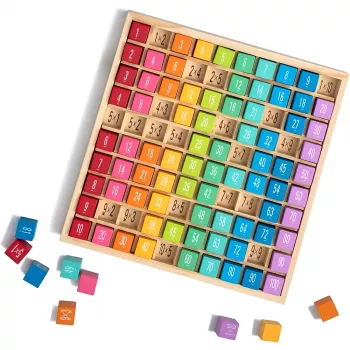
If you’re building a screen-free math routine, the Wooden Multiplication Board for Kids is a simple, tactile way to practice times tables at home or in learning centers. It works especially well for short daily sessions where kids can repeat facts, notice patterns, and build confidence through hands-on success.
For households that also maintain a homework or learning station, a larger display can make it easier for parents or older kids to view digital assignments when needed. The 24 Inch FHD 1080p Computer Monitor with 75Hz Refresh Rate and AMD FreeSync can be a practical add-on for shared spaces—while keeping multiplication practice itself hands-on and distraction-light.
Care, Storage, and Classroom Tips
FAQ
What age is a multiplication board best for?
It’s typically best for ages 6–10, with flexibility in both directions. Younger kids can focus on 2s/5s/10s and grouping, while older kids can use it for speed, tricky facts, and even division as an “unknown factor” challenge.
How long should kids practice multiplication each day?
About 5–15 minutes a day is usually enough when practice is consistent. Prioritize accuracy and end on a successful round so kids associate practice with progress, not pressure.
Does a multiplication board help with memorization?
Yes—multi-sensory repetition and pattern spotting can improve recall over time. It works best when paired with understanding (like arrays and equal groups), so kids know what the facts mean, not just what they are.










Leave a comment